End of year reflections
This summer marks the end of the first year of my PhD - and what a busy year it’s been!
In July, I passed my PhD transfer viva. This is an important milestone where students present their progress so far, explain their future plans, and answer questions from a panel of academic experts. I was nervous, but the conversation was thoughtful and supportive - and I’m pleased to say I passed!
The panel gave helpful feedback. They felt the EmCASH study was relevant, original, and had real potential to make a difference. They also encouraged me to narrow the focus so the work remains achievable within the time and resources I have.
After some reflection, I’ve made a few key changes:
I’m going to prioritise the voices of young people and their caregivers, rather than focusing on clinicians or commissioners. These are often the most under-heard voices in research.
The study will now focus on emergency NHS services, like A&E and crisis response teams. This aligns with the NHS’s new 10-year plan and the government’s promise to invest £150 million in mental health emergency care.
I’ve defined “emergency care” as any support offered by professionals within 24 hours of self-harm - especially in pre-hospital settings, where we know far less about what actually helps.
I’m focusing more clearly on youth- and family-centred care - that is, care that is respectful, relevant, and responsive to what young people and families actually need.
The revised research question (as it stands) is now:
How can youth- and family-centred principles be embedded into emergency NHS services to make them more helpful for young people who self-harm?
This feels like the right direction. It reflects what I’ve heard from young people, families, and frontline staff - and it has real potential to shape future services.

The government’s recently released 10 Year Health Plan - full reports can be found here: https://www.gov.uk/government/publications/10-year-health-plan-for-england-fit-for-the-future
A year of listening and learning (and paperwork!)
Looking back, I’ve really enjoyed the intellectual side of the project - reading, writing, and exploring complex challenges in care. I’ve especially valued working with young people and families through our advisory groups, who continue to shape the research in powerful and personal ways.
At the same time, the workload has been tough. Balancing multiple workstreams (from literature review and ethics to training, conferences, teaching, and other projects) has been overwhelming at times. Life outside work doesn’t pause either.
With support from my supervisors, I’ve asked to reduce my hours slightly next year. I’ve also narrowed the scope of the project to focus on what feels most important and achievable.
What’s next?
In the coming months, I’ll be:
Running workshops with young people and caregiver advisors to prioritise ideas and guide next steps
Beginning full-text analysis for the literature review
Preparing to analyse the large NHS dataset (currently being finalised by the CUREd+ team)
Applying for final ethical approval so I can begin recruiting young people and caregivers for interviews
This project continues to grow through conversation - with young people, families, clinicians and researchers. I’m so grateful to everyone who has shared their time, insights, and lived experience so far.
I’m learning every day, and I’m excited to see where the next year takes us.
Dan :-)
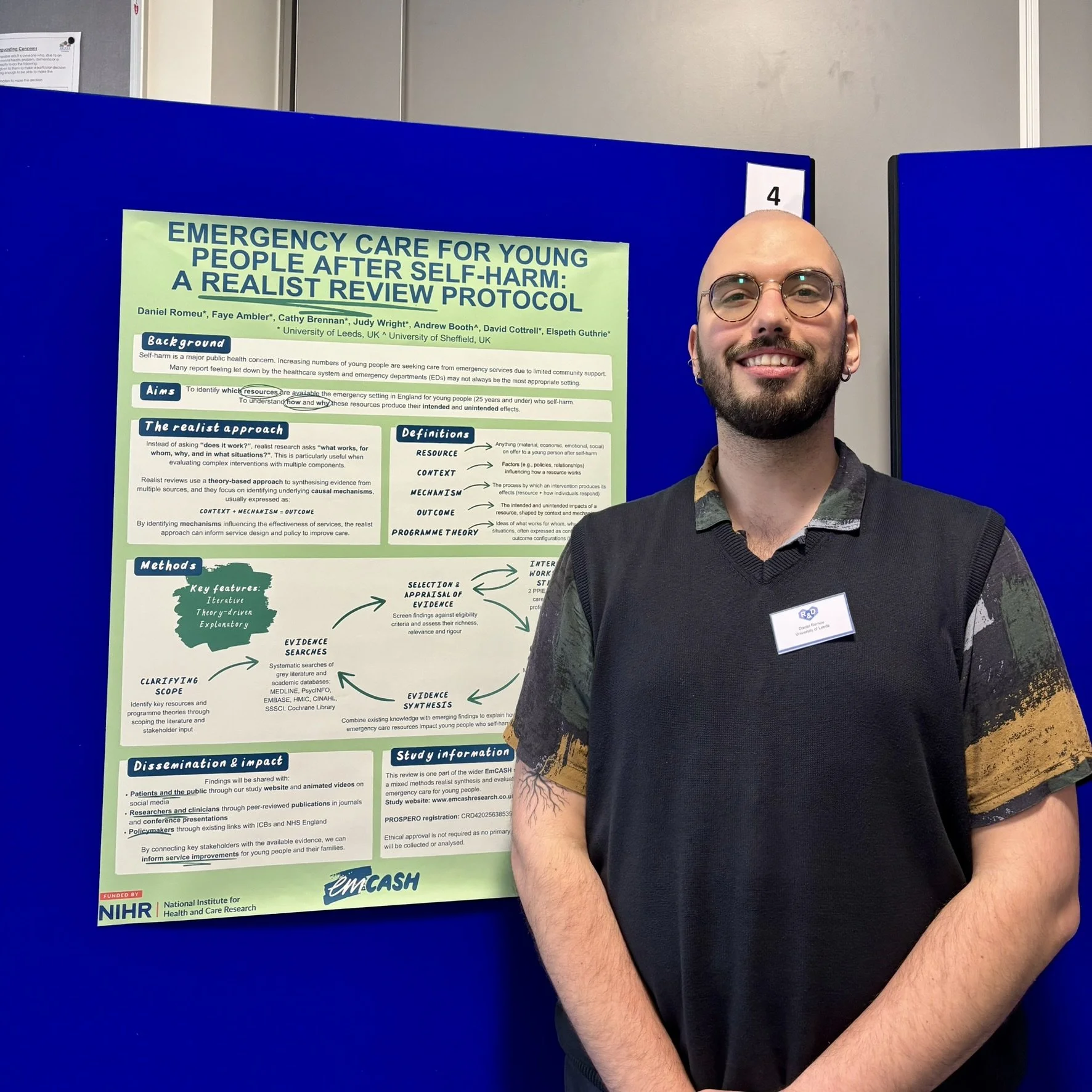
Me presenting the EmCASH review protocol at a research forum earlier this year!